Guide · Template and example · November 2026
Website or app project brief: template and example (2026)
One or two pages are enough to get a serious quote, as long as they answer the right questions: what the project is for, who it's for, what has to exist at launch and what can wait, which languages, which payments, what budget and what deadline. This template turns the questions from our brief form and our discovery call into 12 sections, with a filled-in example and the most common mistakes.
Start a project →See pricing →
- Useful length
- One or two pages
- Sections in the template
- 12
- What matters most
- What must exist at launch, and what can wait
- Next
- Free discovery call, reply within 24 hours
Your brief and the functional specification are two different documents
People often use “brief” and “specification” for the same thing, but they are two documents. The first one is yours: it describes the need in your own words, before you approach any agency. The second is written by the technical team during the discovery phase: the functional specification, which details screens, rules and data, together with an estimate, a schedule and a risk register.
You don't have to write the second one. This guide helps you write the first: precise enough that three agencies quote for the same thing, and short enough to be read in full.
The questions in our brief form
Our contact form asks four questions before your contact details. They are the first lines of any brief: if you can answer them, you already have the essentials.
| Question | The options offered | What it changes in the quote |
|---|---|---|
| What do you want to build? | Mobile app, business platform, online store, business website, dedicated team, something else (several choices allowed) | The type of project sets the order of magnitude: websites from 4,000 MAD, e-commerce from 7,000 MAD, platforms from 12,000 MAD, mobile apps from 30,000 MAD |
| Where are you at? | An idea to scope, mock-ups or a specification, an existing product to rebuild, a live product to improve | An existing product starts with a review of its code and hosting; an idea starts with scoping |
| By when? | As soon as possible, in 1 to 3 months, in 3 to 6 months, no fixed date | A hard deadline shrinks the launch scope, not the quality |
| What budget do you have in mind? | Under 10,000 MAD, 10,000–30,000, 30,000–100,000, 100,000–300,000, over 300,000 MAD, not sure yet | A range lets us propose the right version instead of just one |
| Your project in a few lines | Goal, audience, key features, useful links | This is the summary of your brief: sections 1 to 4 below |
The template: 12 sections to fill in
Copy these sections into a document and answer each one in a few lines. “Not sure yet” is an acceptable answer: it tells us what needs deciding during discovery.
Context and goal
Your business in two sentences, and what the website or app should change: more quote requests, online orders, less manual data entry, a service that doesn't exist yet. If you can, a number you already track today.
Users
Who will use it: your customers, your staff, couriers, partners, an administrator. For each one, what they need to do and on which device, phone or computer.
Key journeys
The three or four paths that matter, from start to finish: “the customer picks a product, pays cash on delivery, gets a WhatsApp confirmation”. A described journey is worth more than a list of pages.
Features, prioritised
Two columns: must-have at launch, and later. Five to ten features at launch is usually enough; the rest becomes a phase 2, quoted separately.
Languages
French, Arabic, English, Spanish or others; which ones at launch; who translates. Arabic needs a real right-to-left layout, not just translated text.
Content
Who provides the text, photos, product sheets and translations, and by when. A website's timeline depends largely on how quickly the content is supplied and approved.
Payments and delivery
Cash on delivery, cards through CMI, NAPS or Stripe, deposits, bank transfer; who delivers and to which cities. Say whether you already have a contract with a bank or a courier.
Integrations
Existing tools to connect: ERP, point-of-sale or accounting software, CRM, WhatsApp, an Excel export. For each one: the tool's name, and whether it offers technical access (an API).
Personal data
The data you will collect (name, phone, address, documents) and who can see it. In Morocco, Law 09-08 governs how it is processed, overseen by the CNDP.
Hosting, ownership and accounts
Write down that the code, designs, domain name, hosting, App Store and Google Play accounts and payment contract will be in your name or transferred to you, with documentation and access.
Budget and deadline
A range, even a wide one, and the date that really matters, with its reason: a season, a trade fair, an opening. Without a reason the date becomes negotiable; with one, the scope adapts.
Acceptance criteria
How you will say “it's delivered”: journeys tested end to end, on which phones and browsers, page speed, content proofread in every language, access handed over.
How to sort features: launch or later
This is the section that weighs most on price and timeline. For each feature, ask yourself:
- Without it, can a first customer still buy, book or contact you? If yes, it can wait.
- Can it be done by hand at first? A WhatsApp confirmation or an Excel export often replaces costly automation for the first few months.
- Is there a third-party tool that already does it? Payments, maps and email sending don't need to be rebuilt.
- How many users will need it in the first year? A feature for a handful of cases can wait for real feedback.
- Is it required by law, the bank or the app stores? Privacy policy, consents, legal notice: those belong in the launch.
An app launched with fewer features on solid foundations costs less to evolve than a complete version launched too early.
A filled-in example (fictional)
The business below is made up to illustrate the template: it is not a VCTRUM client. “Maison Argane” is a fictional cooperative that sells argan oil and cosmetics and wants to sell online across Morocco.
| Section | What Maison Argane writes (fictional example) |
|---|---|
| Context and goal | A cooperative that currently sells on site and through Instagram messages. Goal: take online orders from all over Morocco without handling everything by message. |
| Users | Individual customers, mostly on phones; two people at the cooperative who manage orders on a computer. |
| Key journeys | 1. The customer picks products, pays cash on delivery, gets a confirmation. 2. The cooperative confirms the order by phone or WhatsApp, ships it, marks it delivered and paid. |
| At launch | A catalogue of about 30 products, cart, cash on delivery, WhatsApp confirmation, an order back office with statuses, an order export for the accountant. |
| Later | Card payments, promo codes, a loyalty programme, a mobile app. |
| Languages | French and Arabic (right to left) at launch; English later. Arabic copy proofread by a cooperative member. |
| Content | Product photos to be reshot; product sheets written by the cooperative before development starts. |
| Payments and delivery | Cash on delivery with a courier; a card payment contract to be looked at for phase 2. |
| Integrations | None at launch. A monthly Excel export of orders. |
| Personal data | Name, phone, delivery address. Access limited to the two order managers. |
| Ownership | Domain, hosting and code in the cooperative's name; access and documentation handed over at delivery. |
| Budget and deadline | 10,000–30,000 MAD; live within 1 to 3 months, before the holiday season. |
| Acceptance | A complete test order on Android and on iPhone, in both languages; every order status checked in the back office; product pages fast on 4G. |
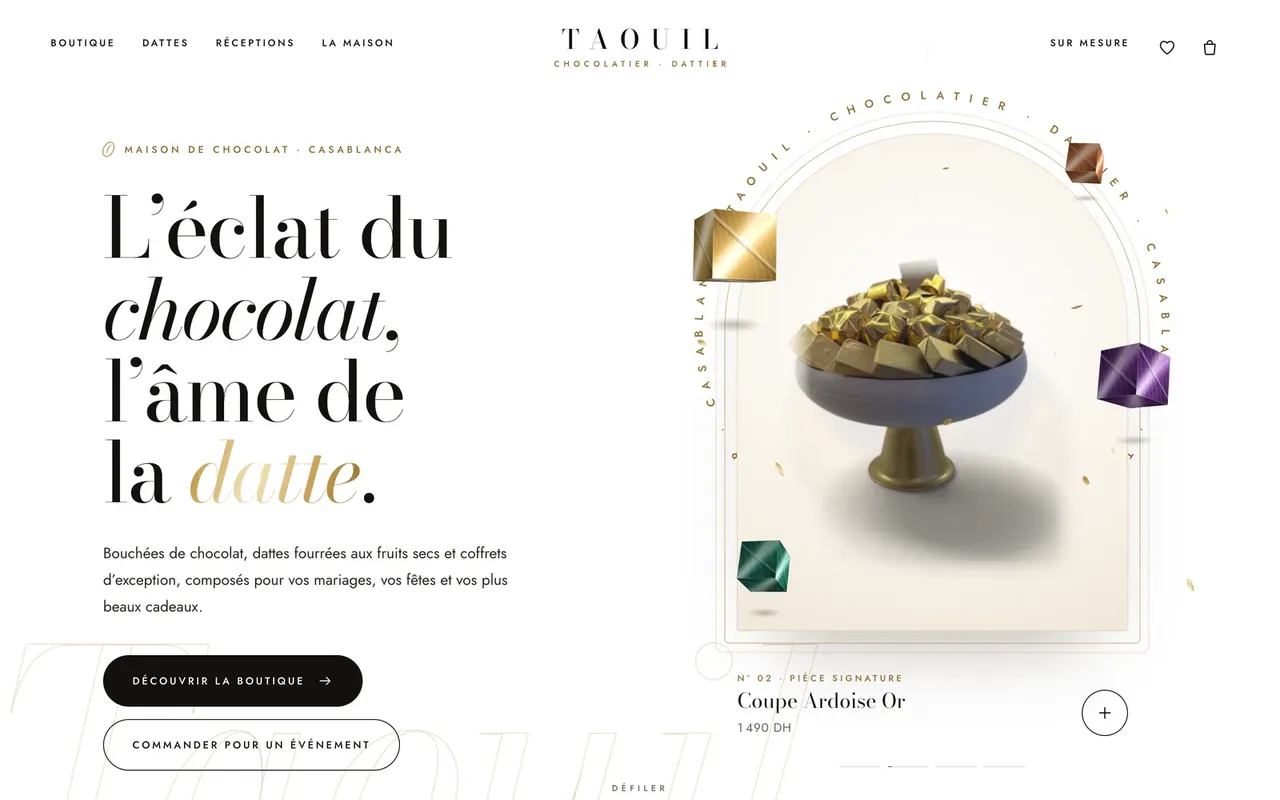
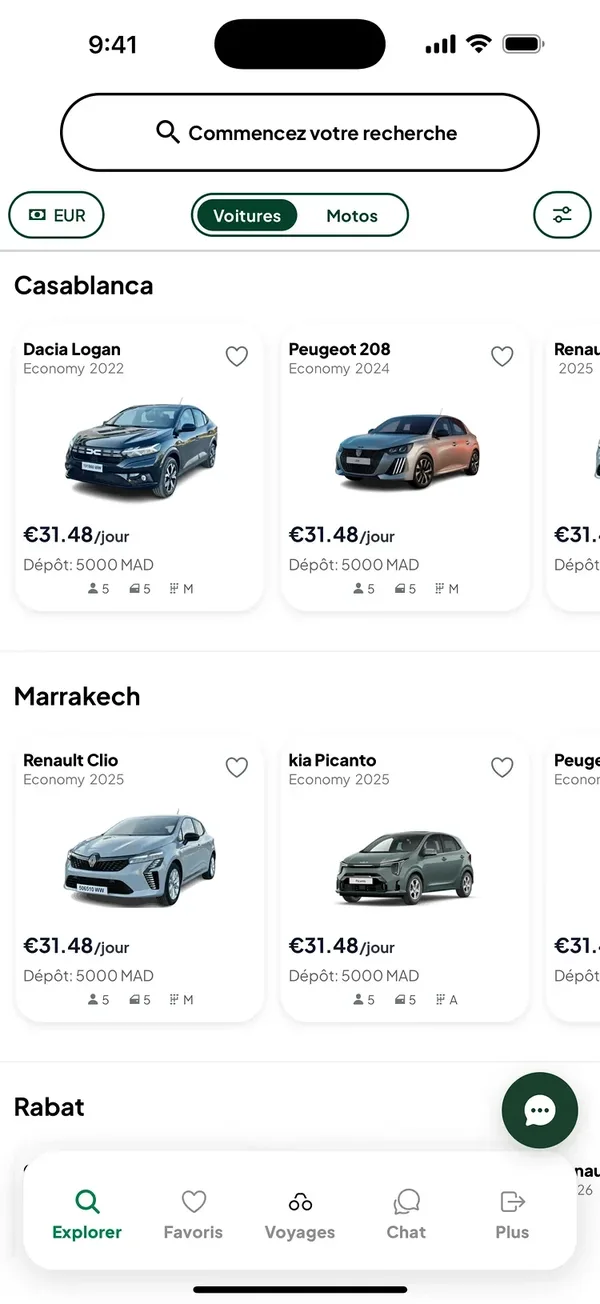
Fictional example, built to illustrate common needs in Moroccan e-commerce, where, according to ANRT's 2024 ICT survey as reported by Hespress, 84.1% of online shoppers pay cash on delivery. For a real online payment case: at Taouil Chocolatier, event orders go through a deposit, with prices recalculated on the server; on Cardnd, customers pay a deposit online and settle the balance at vehicle handover.
The most common mistakes
- Describing pages instead of what users need to do.
- Putting everything into the launch: version 1 becomes the final version, and the budget is gone before the first customer feedback.
- Copying a well-known app (“like Glovo”) without saying which part matters to you.
- Forgetting internal users: the admin, order statuses, exports, access rights.
- Forgetting content: who writes, who takes the photos, who translates.
- Keeping the budget secret: without a range, each agency quotes a different version and the quotes can no longer be compared.
- Saying nothing about who owns the code, the domain and the accounts.
- Not saying how delivery will be accepted: without acceptance criteria, “done” doesn't mean the same thing to everyone.
What we do with your brief
Whether you arrive with a three-line idea or a twenty-page document, the path is the same:
The brief
Two minutes online: type of project, stage, timeline, budget, and your project in a few lines. A person on the team reads it and replies within 24 hours.
Confidentiality
We sign a non-disclosure agreement before going into the details of your project.
The discovery call
Free and with no commitment, in French, English or Arabic. We go through the 12 sections with you and point out what's missing, or what costs a lot for little effect.
The detailed proposal
Scope, schedule and price, with several options if your budget calls for it: for example a launch version and a phase 2.
Project discovery
Workshops with your team, mapping of needs and users, review of what exists and of the risks. Deliverables: functional specification, estimate and schedule, risk register.
Design, then development
Mock-ups and a clickable prototype approved before the first line of code, then two-week sprints with a demo every week.
Taking over a project started elsewhere? Then the brief starts with an audit of the existing code and hosting.
Our work
Real projects, with their screens and their status.
Frequently asked questions
Do I need a brief to ask for a quote?
No. An idea is enough for a first conversation: the discovery call exists to turn it into a clear, priced scope. A one- or two-page brief, even an incomplete one, simply makes quotes more precise and easier to compare.
How long should a project brief be?
One or two pages to approach agencies. The screen-by-screen detail comes later, in the functional specification written during discovery. A very long document is often read less carefully than one clear page.
Who writes the functional specification?
At VCTRUM, the project team writes it with you during the discovery phase: a project manager and a technical lead. You bring the goals, the constraints and your knowledge of your users; we bring the technical choices, the estimate and the list of risks.
Is my idea protected if I send it?
We sign a non-disclosure agreement before going into the details of your project. For the first message, a few lines about the goal and the audience are enough.
Can the brief change during the project?
Yes, but how depends on the contract. On a fixed-price project, scope, price and schedule are set after discovery: a change is discussed and priced before it's added. With a dedicated team billed monthly, priorities can change from one sprint to the next.
Is a brief for a website different from one for an app?
The 12 sections are the same. An app adds questions: iOS, Android or both, notifications, offline mode, app store publishing and developer accounts in your company's name. Our website and app cost guides explain what moves the budget.
Send us your brief
Two minutes, even if not every section is filled in. We reply within 24 hours to set up the free discovery call.